- Get Started
- Programs
-
Workshops
Filming for Live Performances WorkshopSpatial & Immersive Audio WorkshopGrand Relanch PartyRational Acoustics: SMAART Operator FundamentalsAudio Technica Wireless Microphone TechnologyETC 3 Day TrainingAlumni Mixer & Open HouseSapsis: Entertainment Rigging FundamentalsSound System Workshop With DEBONAIR and Wave MotionMinuit Une DemoProjection MappingMartin Audio: Optimized Line ArraysObsidian Lighting Control Level 1 & 2 TrainingAllen & Heath dLive Certification TrainingBob McCarthy: Stereo in the Round at Stadium ScaleSteel Yard Soundsystem WorkshopShure Wireless RF Systems WorkshopDrum Tech WorkshopAI for Live Entertainment: Announcing, Translation and AccessibilityObsidian Lighting Control TrainingDante CertificationYamaha Console WorkshopGetting Started with AbletonSound Design & Mixing for TheatreAbleton User Group Meetups Going Deeper with Ableton LiveEntertainment Power Distribution with LEX ProductsPangolin Laser Technician CoursesProjection MappingElevating as a Modern DJSports Broadcast AudioVideo Essentials WorkshopLED Pixel Mapping Workshop 2024Soldering Workshop
- Industry Partners
- Youth
- About
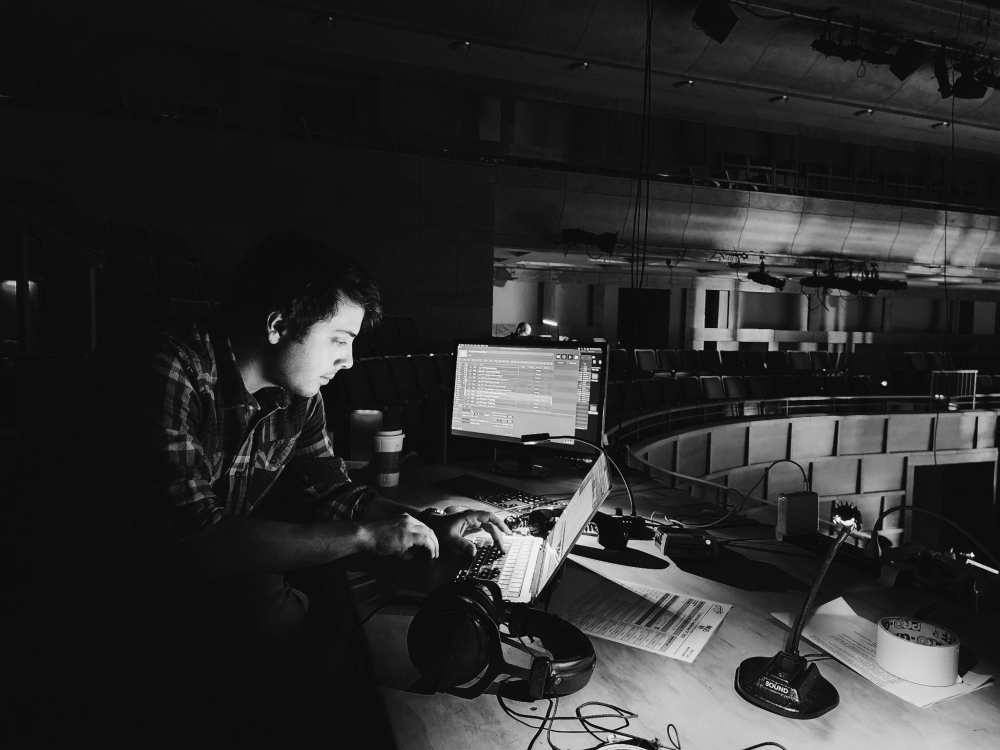
Spatial & Immersive Audio Workshop
September 3rd-4th, 2026
10AM-5PM | FREE
This two-day workshop introduces how to work with spatial and immersive audio.
The first day introduces the foundational concepts in an approachable and listening-forward format. Participants will be asked to listen to directional cues, experience time delay and phase relationships, utilize simple audio calculations, create a short binaural mix, and start to work with the Dolby Atmos Renderer. At the end of day one, the participants will have the ability to create headphone-based spatial audio, an understanding of how we localize sound, and have started to explore spatial audio over loudspeakers.
The second day expands these concepts into creating multichannel production techniques. Participants will upmix their binaural Dolby piece to a speaker system, and, while doing so, they will gain an intuitive understanding of the algorithms running behind the scenes. The final portion of the workshop will introduce ambisonic recording as a way to capture and reproduce spatial environments. Throughout this workshop, there will be a focus on exploring both commercial solutions and free/low-cost alternatives. At the end, participants will have a clear definition of spatial and immersive audio and a toolset for creating their own spatial audio experiences.
About Stewart Blackwood
Stewart Blackwood is a composer, sound designer, technologist, and educator whose work has been heard across the United States. He is an Assistant Professor of Composition and Sound Design at Carnegie Mellon University's School of Drama, where he mentors MFA and BFA sound design students, teaches a variety of courses, and conducts practice-led research. Alongside his academic work, he is an active freelance audio artist. His work has been shown at a variety of venues, including the International Computer Music Conference, New York City Center, Cleveland Play House, La Jolla Playhouse, City Theatre, Island Shakespeare Festival, Pittsburgh Public Theatre, and many others. This work often leverages original composition and spatial audio technology in experimental performance. Before joining academia, he was an Audio Experience Engineer at a spatial audio technology startup in Encinitas, California.